Anion Gap Calculator Based on Sodium, Chloride, and HCO3
How the Anion Gap Measures
The anion gap is a practical way to understand serum electrolytes and look for hidden problems in acid-base balance. It enables clinicians spot an electrolyte imbalance that may not be obvious from individual lab values alone. On a serum chemistry panel, the anion gap provides a simple diagnostic clue about whether there is an acid-base disorder such as metabolic acidosis.
Although it is called an “anion” gap, the number is not a direct count of all unmeasured ions. Instead, it reflects the difference between measured cations and measured anions in the blood. That difference acts as a reliable screening tool for a metabolic disturbance, especially when the question is whether the body has accumulated acids or reduced bicarbonate. In clinical interpretation, the anion gap helps narrow the differential diagnosis before additional testing is ordered.
Because the calculation is built from routine lab values, the result is often available from a standard serum chemistry sample. That makes it one of the simplest ways to identify an anion deficit caused by unmeasured acids, or a change in the balance of chloride and bicarbonate that suggests another process. Understanding what it measures is the first step toward using an anion gap calculator correctly.
Anion Gap Formula Using Sodium, Cl, and Bicarbonate
The classic computational formula uses Na, Cl, and bicarbonate:
Anion gap = Na − (Chloride + Bicarbonate)
This formula matches up the chief measured positive ion, sodium, with the major measured negative ions, chloride and bicarbonate. In day-to-day practice, the result is viewed as part of the broader buffering system that keeps blood pH stable. When acid accumulates, bicarbonate often falls as it buffers the excess acid, which alters the final number.
An anion-gap calculator does this math instantly, but the value still needs careful clinical assessment. The calculator output is an unadjusted result unless it includes albumin correction. That distinction matters because albumin is one of the major unmeasured anions in blood, and changes in albumin can make the gap appear artificially low or normal.
When sodium, chloride, and bicarbonate are read together, they can reveal whether there is a pattern of elevated chloride, a hidden acid load, or a loss of bicarbonate. This is why the formula is so important in evaluating systemic acidosis and other acid-base problems.
How to Work With an Anion Gap Calculator Step-by-Step
Working with an anion gap calculator is straightforward, but accuracy depends on proper calculator input. To begin, find the relevant values from the lab report: serum sodium, serum chloride, and serum bicarbonate. These values usually come from a standard chemistry panel, and they should all be entered in the same units shown by the laboratory.
Begin is to make sure that the numbers are from the same draw and the same serum chemistry panel. The second step is to enter the serum sodium value. Step three is to enter the serum chloride value. Last is to enter the serum bicarbonate value. Once the calculator processes the data, it returns the anion gap, which you can then compare with the lab’s reference range or your institution’s reference interval.
After the result appears, assess it in context. A single number is insufficient to diagnose a disorder by itself. Ask whether the result suggests high anion gap metabolic acidosis, normal anion gap metabolic acidosis, or an apparently normal result that still needs further review. The calculator is most useful when it supports a broader clinical picture rather than replacing judgment.
When reviewing the output, pay attention to whether the pattern fits the expected chemistry of the patient’s condition. A low bicarbonate with a high chloride may point toward a different process than a low bicarbonate with a raised gap. That distinction is the reason the calculator is so helpful for bedside clinical interpretation.
Typical Anion Gap Range & Clinical Interpretation
The normal range for the anion gap varies depending on the laboratory method, report format, and whether potassium is included. This is why the result should always be interpreted using the lab’s posted normal range. In practice, clinicians often think in terms of a typical interval rather than a single universal number.
A standard anion gap means the measured sodium is balanced by chloride and bicarbonate in a way that does not suggest a major accumulation of unmeasured acids. However, a normal result does not automatically mean everything is fine. It may still occur in normal anion gap metabolic acidosis, where bicarbonate has been lost and chloride rises to keep the electrical balance unchanged.
A high anion gap usually raises concern for unmeasured acids in the bloodstream. That can occur in high anion gap metabolic acidosis, which is an important subtype of metabolic acidosis. The result is a useful helpful indicator because it can help distinguish between disorders caused by acid accumulation and those caused by bicarbonate loss.
Clinical interpretation should also consider whether the laboratory result fits the patient’s symptoms, medications, kidney function, and acid-base status. A calculated value alone cannot tell the whole story. It is most informative when paired with pH, CO2, and the rest of the chemistry panel.
Sources of a Increased Anion Gap
A high anion gap metabolic acidosis happens when unmeasured acids build up and deplete bicarbonate. The typical pattern is usually a declining bicarbonate level with a widening gap, which indicates that the blood contains extra acid anions not counted directly by the routine lab. This is one of the most important uses of an anion gap calculator.
Typical causes include acidosis from lactate, diabetic ketoacidosis, kidney failure, and toxic alcohol ingestion. In acidosis from lactate, tissue hypoperfusion or impaired oxygen use leads to lactate accumulation. In diabetic ketoacidosis, ketone production rises rapidly and bicarbonate is consumed. In renal insufficiency, the body cannot eliminate acid efficiently, so acids accumulate. With toxic alcohol ingestion, compounds such as methanol or ethylene glycol form acidic metabolites that increase the gap.
Elevated gap states are often linked to generalized acidosis and can progress quickly, so they should prompt urgent evaluation. The anion gap is not a diagnosis by itself, but it often provides the first strong early detection tool for serious disease. The next step is to identify the source of the acid load through the diagnostic differential.
In practice, the pattern is often: low bicarbonate, normal or low chloride relative to the degree of bicarbonate drop, and a widened gap. That pattern reflects an missing anions from unmeasured acids rather than simple bicarbonate loss.
Reasons of a Standard Anion Gap Metabolic Acidosis
A normal anion gap metabolic acidosis is often referred to as hyperchloremic acidosis because chloride rises as bicarbonate falls. The anion gap stays close to normal, but the acid-base problem is still real. This happens when bicarbonate is lost from the body and replaced by chloride to maintain electrical neutrality.
Common causes include diarrhea, renal tubular acidosis, and other forms of bicarbonate loss. With diarrhea, large amounts of bicarbonate-rich fluid are lost from the gastrointestinal tract. In renal tubular acidosis, the kidneys do not manage to acidify urine or reclaim bicarbonate properly, which leads to persistent acidosis. These conditions often show hyperchloremia because chloride shifts upward as bicarbonate falls.
This pattern is important because a normal anion gap does not exclude metabolic acidosis. Rather, it guides the clinician toward different mechanisms. The calculator result becomes a guide to the likely cause, especially when paired with the patient’s symptoms and full laboratory profile. That is why the anion gap calculator is useful not only for identifying high-gap disorders but also for recognizing normal-gap states that can otherwise be overlooked.
When interpreting this pattern, think in terms of chloride shift and bicarbonate replacement. The serum anion gap unit differences chemistry may show a normal gap, but the acid-base balance is still disturbed. This is a classic example of why careful interpretation matters more than the number alone.
Albumin Correction and Constraints
Serum Albumin is a key not directly measured negative ion, so variations in albumin can greatly affect the calculated gap. In hypoalbuminemia, the gap may appear decreased than expected because there are fewer negatively charged proteins in the blood. That can conceal a real acid-base problem and make a high-gap disorder look misleadingly normal.
For this reason many clinicians use a corrected anion gap rather than relying only on the raw number. The albumin correction helps calculate what the gap would be if albumin were normal. While different formulas exist, the principle is the same: low albumin can conceal an elevated gap, so the result should be adjusted when albumin is abnormal.
Still, there are limitations. The corrected number is only an estimate, and the relationship between albumin and the gap is not fully precise in every clinical situation. Other unmeasured ions, laboratory methods, and concurrent disorders can also influence the value. Therefore, a corrected result should inform, not replace, the full clinical interpretation.
When albumin is low and the uncorrected value looks normal, the clinician should consider whether the true acid burden is being overlooked. The corrected anion gap is especially important when evaluating critically ill patients or anyone with unexplained metabolic acidosis.
Typical Pitfalls While Evaluating the Outcome
One common error is overlooking lab error. A sample problem, contamination, or reporting issue can distort sodium, chloride, or bicarbonate and lead to a misleading result. If the number does not fit the patient’s condition, it is worth confirming the laboratory result before making decisions.
Another common issue is unit mismatch. Entering values from different unit systems or misreading the report can create a false calculation. The anion gap calculator is only as accurate as the numbers fed into it, so the calculator input must be checked carefully.
Pseudohypobicarbonatemia can also confuse interpretation. In this situation, bicarbonate appears falsely low on a chemistry panel, which may make the gap appear high even when the clinical picture does not fit. This is a reminder that the anion gap is a clue, not a final answer.
Lastly, do not ignore clinical context. A calculation that suggests a high-gap process should be interpreted alongside symptoms, pH, lactate, ketones, kidney function, medication exposure, and toxicology concerns. The same number may mean different things in different settings. Good interpretation comes from combining the serum chemistry data with bedside assessment and the overall differential diagnosis.
Common Questions About Anion Gap Calculation
What is an anion gap calculator used for?
An anion gap calculator is used to interpret sodium, chloride, and bicarbonate values so clinicians can quickly assess electrolyte imbalance and possible acid-base disorders. It is especially helpful for identifying patterns consistent with metabolic acidosis and for guiding further workup using clinical decision support.
How do sodium, chloride, and bicarbonate determine the anion gap?
The standard calculation formula subtracts chloride and bicarbonate from sodium: anion gap = sodium − (chloride + bicarbonate). This reflects the balance between measured cations and anions in the blood. If bicarbonate falls or unmeasured acids rise, the result can signal an acid-base disorder that needs additional evaluation.
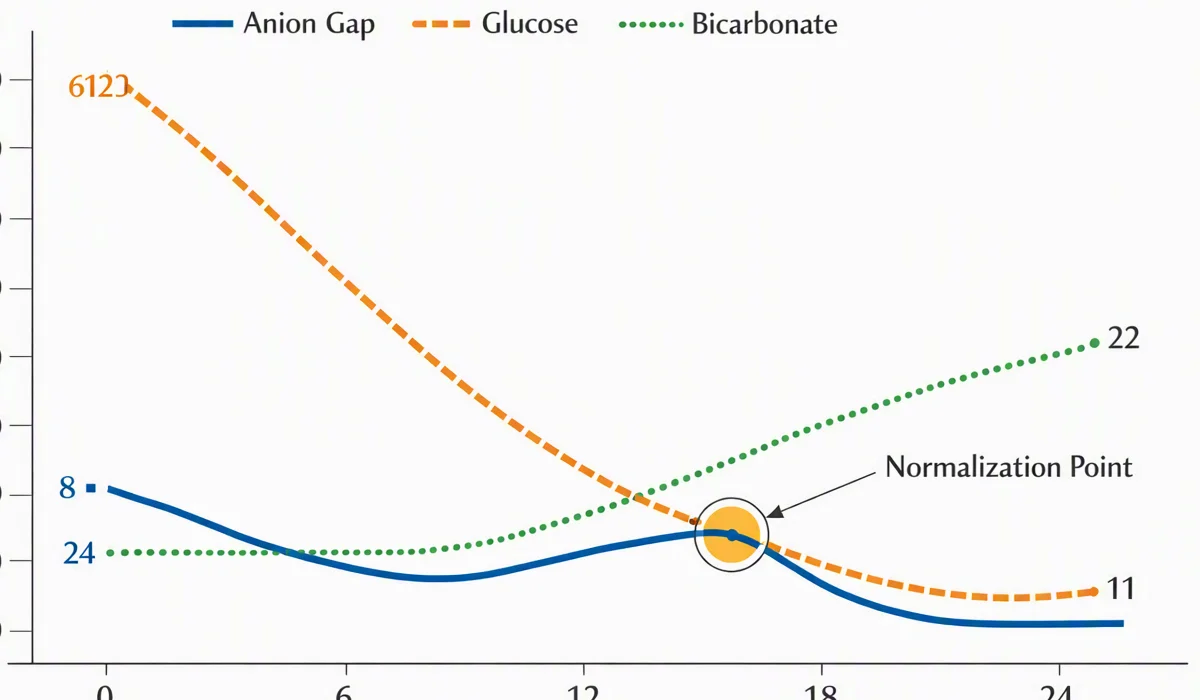
What is a high anion gap mean?
A high anion gap usually means unmeasured acids have accumulated, which is a key feature of high anion-gap metabolic acidosis. Common causes include lactic acidosis, diabetic ketoacidosis, kidney failure, and toxic alcohol ingestion. The result is a useful diagnostic clue, but the final cause must be identified from the entire clinical context.
Why is albumin correction important for the anion gap?
Albumin plays a major role in the normal gap, so hypoalbuminemia can make the measured value appear artificially low or normal. A corrected anion gap helps account for this albumin adjustment and may reveal a masked acid load. Without correction, clinicians may miss a important high-gap disorder.
Can a normal anion gap still indicate metabolic acidosis?
It can. A normal result can still occur in normal anion gap metabolic acidosis, also called hyperchloremic acidosis. This often reflects bicarbonate loss from diarrhea or renal tubular acidosis, with compensatory hyperchloremia. So a normal gap does not exclude metabolic acidosis; it simply suggests a different type of acid-base balance problem.