Anion Gap Calculator for Chloride Shift Interpretation
How the Anion Gap Assesses
The anion gap is a derived value used to evaluate electrolyte balance and aid assessment of acid-base status. It assists clinicians interpret a laboratory result by calculating the difference between observed cations and measured anions in the blood. Because routine chemistry panels do not measure every charged particle, the anion gap provides insight into unmeasured anions that may be present during a metabolic disturbance.
An anion gap calculator is a helpful diagnostic tool for examining blood chemistry quickly. It is especially valuable when a patient has an electrolyte imbalance, since small shifts in sodium, chloride, bicarbonate, and related values can suggest an underlying acid-base disorder. In simple terms, the calculation helps determine whether the blood has an excess of acids, an excess loss of base, or a pattern that reflects electrolyte shift physiology.
The anion gap is not a diagnosis by itself. It is part of broader acid-base analysis and should be interpreted alongside the full electrolyte panel, the serum bicarbonate level, and other clinical findings. Used well, it turns a basic chemistry snapshot into a more meaningful picture of acid-base balance.
How the chloride shift Affects the Anion Gap
The chloride shift describes the transfer of ions that works to preserve electroneutrality in body fluids. In clinical interpretation, changes in chloride often occur in response to alterations in bicarbonate. When bicarbonate falls, chloride may rise to maintain balance, which can keep the anion gap near normal even when an acid-base disorder is present.
This relationship is important because the chloride shift can hide or illuminate a metabolic problem. For example, if bicarbonate is lost through the kidneys or gastrointestinal tract, the body may preserve or increase chloride. The result is a pattern of normal anion gap acidosis, also called hyperchloremic acidosis. In this setting, the anion gap may not rise, even though the patient has clear metabolic acidosis.
By contrast, if acids accumulate and bicarbonate falls without a matching chloride increase, the anion gap rises. That pattern is more indicative of high anion gap acidosis. Understanding the chloride shift helps distinguish whether the chemistry reflects a rise in acids, a reduction in buffer, or a compensatory change in the buffer system.
For that reason, an anion gap calculator is especially helpful when reviewing chloride level changes. It helps connect the raw numbers to the underlying physiology and improves recognition of a true anion deficit versus a simple compensatory shift.
Anion Gap Formula and Calculator Inputs
The typical anion gap calculation uses sodium, potassium, chloride, and bicarbonate. Many clinicians apply the streamlined formula:
Anion gap = Sodium − (Chloride + Bicarbonate)Certain versions add potassium as well:
Anion gap = (Sodium + Potassium) − (Chloride + Bicarbonate)Either approach reflect the relationship between measured cations and anions. The calculator input values generally come from common serum electrolytes or a chemistry panel. Because each lab may report slightly different units or reference intervals, the exact reference range should always be interpreted in context.
In practical use, the calculator requires accurate values for:
- Sodium, the primary measured cation
- Potassium, sometimes included in the formula
- Chloride, a primary measured anion
- Bicarbonate, often reported as CO2 on chemistry panels
These numbers show the patient’s current blood chemistry and help estimate whether there are extra unmeasured anions contributing to the result. A helpful way to think about the calculation is that it approximates the gap left behind by anions not listed directly on the panel.
Used correctly, the anion gap calculator provides a fast diagnostic calculation that helps guide bedside decision-making. However, it should always be reviewed as part of the full clinical picture rather than treated as a standalone answer.
Typical Ranges and Adjusted Anion Gap
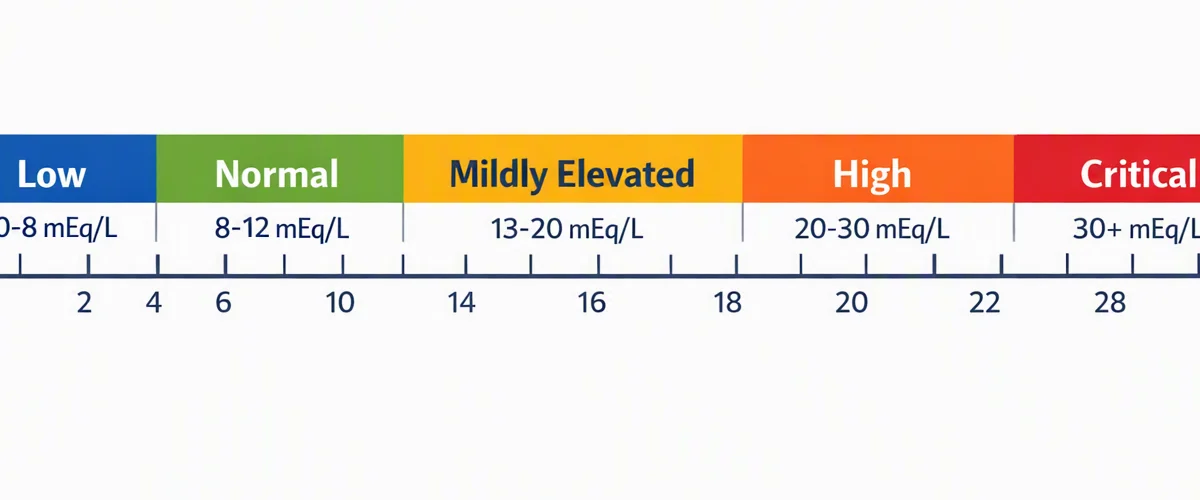
A common normal anion gap differs slightly by laboratory method and whether potassium is added. Many clinicians regard as a value around 8 to 12 mEq/L normal when potassium is omitted, though the precise range should match the lab’s reference range. A normal result does not always exclude illness; it may simply indicate that the electrolyte pattern is balanced in a way that does not increase the gap.
Albumin is a key unmeasured anion and has a significant effect on the anion gap. When albumin is low, the measured anion gap may appear falsely normal or low even if acids are present. This is why albumin correction is important so much in interpretation. In hypoalbuminemia, the corrected value can uncover hidden metabolic problems that the unadjusted number overlooks.
A corrected value calculates what the anion gap would be if albumin were normal. This is valuable because low albumin reduces the anion contribution from the protein fraction, creating an apparent anion deficit. Without adjustment, a patient with serious acid retention may look less abnormal than they truly are.
Albumin correction is particularly important in hospitalized patients, malnutrition, liver disease, or inflammation, where hypoalbuminemia is often seen. In these settings, the corrected value gives better clinical interpretation than the raw number alone. It can also help avoid missing a mixed acid-base disorder.
Elevated Anion Gap vs Typical Anion Gap Disorders
Acid-base acidosis is the main category most often evaluated with the anion gap. The main distinction is whether the gap is elevated or is still normal. A high anion gap acidosis implies that acids or acid equivalents have collected, increasing the amount of unmeasured anions in the blood.
Common causes of high anion gap acidosis include lactic acidosis, ketoacidosis, and renal failure. In each case, the body is retaining or producing acids faster than they can be eliminated or buffered. The anion gap rises because bicarbonate is consumed while accompanying anions remain present in circulation.
A normal anion gap acidosis, on the other hand, usually reflects bicarbonate loss with a corresponding rise in chloride. This is where the chloride shift becomes important clinically. The chloride increase helps preserve electroneutrality, but the tradeoff is a lower bicarbonate concentration and a persistent acidosis without a widened gap.
Recognizing the difference matters because the causes and treatment strategies differ. High-gap disorders often prompt evaluation for toxic ingestion, tissue hypoxia, or severe metabolic crisis. Normal-gap disorders more often suggest gastrointestinal bicarbonate loss, renal tubular problems, or other patterns of chloride-related compensation.
Interpreting Findings in Clinical Settings
The anion gap should be interpreted together with the complete presentation, instead of in isolation. An arterial blood gas helps show whether the patient has acidemia, alkosis, or a mixed acid-base picture. Meanwhile, serum electrolytes indicate whether alterations in chloride, bicarbonate, or sodium explain the gap.
One useful concept is the delta gap, which compares the elevation in anion gap to the fall in bicarbonate. It can help identify mixed acid-base problems. For example, if the gap is elevated more than expected, there may be an additional metabolic alkalosis or chronic respiratory process. If the change is less than expected, there may be a concurrent normal-gap acidosis.
Clinical interpretation becomes more accurate when the anion gap is viewed as part of a broader acid-base analysis. A patient may have a high-gap metabolic picture on chemistry results, but the arterial blood gas may show compensation, overlap, or a second process. That is why the anion gap calculator should aid, not replace, clinical reasoning.
When reviewing a serum bicarbonate result, it is also important to note whether the bicarbonate drop fits the chloride rise. If chloride is elevated while bicarbonate is low, the pattern may support a normal anion gap acidosis. If chloride is not elevated and delta-delta calculator bicarbonate is low, an accumulation of acids is more likely.
Frequent Causes of Abnormal Results
Abnormal anion gap results often suggest a specific acid-base disturbance. A high gap may indicate lactic acidosis, ketoacidosis, renal failure, or contact with toxins. These conditions raise acid load or decrease acid clearance, which increases anion concentration from unmeasured acids.
Lactic acidosis usually arises when tissue oxygen delivery is impaired or when metabolism shifts toward anaerobic pathways. Ketoacidosis may develop in diabetes, starvation, or alcohol-related states. Renal failure reduces the kidney’s ability to excrete acids and regenerate bicarbonate, resulting in a progressively higher gap over time.
Normal-gap abnormalities are often linked to gastrointestinal loss of bicarbonate, such as diarrhea, or renal causes that deplete bicarbonate. In these situations, chloride goes up to replace the lost base, which stops the anion gap from widening. That makes the chloride shift a important clue in separating acid loss from acid accumulation.
Some toxins can also cause unusual patterns or mixed disorders. Because toxin-related states may change quickly, a single calculator result should not be used in isolation. Instead, it should be interpreted with the patient’s symptoms, medication exposures, renal function, and the full electrolyte panel.
Limitations of an Anion Gap Calculator
An anion gap calculator is practical, but it has limitations. One key issue is laboratory variation. Various analyzers and reporting methods can alter the reference range, especially when potassium is counted or omitted. A result that seems abnormal in one scenario may be normal in another.
Testing error can also alter the reading. Slight inaccuracies in sodium, chloride, or bicarbonate may shift the gap enough to impact interpretation. This is particularly important when values are near the threshold or when a patient has unusual body chemistry, such as severe dehydration, marked protein abnormalities, or mixed acid-base states.
Another drawback is that the calculator does not reveal the source of the problem. It can indicate that the numbers suggest an pH balance issue, but it cannot determine whether the issue is lactate acidosis, ketone acidosis, kidney insufficiency, poison exposure, or loss of bicarbonate. It requires history, examination, and further testing.
For these reasons, clinical assessment remains essential. The tool works best as a helping tool for clinical evaluation, not a substitute for a full evaluation. When outcomes do not align with the patient’s condition, review the inputs again, verify the sample, and consider the wider context.
Frequently Asked Questions About Anion Gap and Chloride Shift
What is an anion gap calculator used for?
An anion gap calculator is used to determine the discrepancy between measured cations and anions in serum chemistry. It assists check acid-base balance, recognize possible metabolic acidosis, and inform assessment of an acid-base disorder using results such as sodium, chloride, and bicarbonate.
How does chloride shift affect the anion gap?
The chloride shift can offset reduced bicarbonate by raising chloride levels, which may maintain the anion gap normal even when acidosis is present. This explains why a pattern of rising chloride with falling bicarbonate often suggests normal-gap acidosis, while a gap rise without chloride replacement indicates a raised-gap process.
What’s the normal anion gap range?
The normal anion gap is influenced by the lab and whether potassium is included in the formula. Some labs use a range around 8 to 12 mEq/L, but the exact reference range should still match the local method and reporting format.
What makes albumin levels change the anion gap?
Albumin is a major unmeasured anion, so low albumin lowers the measured gap. In hypoalbuminemia, the raw result may miss the true acid load, which is why albumin correction is critical for accurate interpretation.
When should a high anion gap be considered urgent?
A high gap may be urgent when it is associated with severe symptoms, rapid breathing, altered mental status, shock, or suspected lactic acidosis, ketoacidosis, renal failure, or toxins. In those settings, prompt evaluation with arterial blood gas, serum electrolytes, and full clinical assessment is important.