How Aspirin Toxicity Affects the Anion Gap
What Is Salicylate Toxicity?
Salicylate toxicity is a form of toxicology emergency caused by exposure to high levels of salicylates, most commonly from aspirin overdose. It can happen after a large single ingestion or after repeated use over time, especially when the dose is underestimated. Since salicylates affect multiple body systems at once, the clinical picture can change quickly and the clinical presentation may be hard to interpret at first.
Common symptoms include tinnitus, nausea, vomiting, sweating, dizziness, and rapid breathing. As the toxin exposure becomes increasingly serious, patients can develop systemic toxicity with confusion, dehydration, fever, and worsening acid-base balance. This is why salicylate poisoning is a important diagnosis in any poisoning workup, especially when the symptoms suggest a metabolic derangement but the full story is not immediately apparent.
One challenge in salicylate poisoning is that the condition does not cause just one acid-base problem. Instead, it often produces a mixed acid-base disorder, making laboratory interpretation more difficult. That is where careful use of an electrolyte panel, blood gas analysis, and an Anion Gap Calculator can aid in identify the underlying acid load and inform urgency of care.
How Salicylate Toxicity Affects the Anion Gap
The anion gap is a valuable diagnostic clue because salicylate toxicity often causes an elevated anion gap. This occurs when acidic metabolites build up in the blood, creating an excess of unmeasured anions. In salicylate poisoning, the body develops metabolic acidosis from several mechanisms, and that acidosis typically pushes the anion gap upward.
Salicylates disrupt oxidative phosphorylation and interfere with energy production, which promotes increased production of organic acids. They also impair normal metabolism, leading to the buildup of lactic acidosis. At the same time, starvation, vomiting, and poor intake can promote ketosis, adding more unmeasured acids to the serum chemistry profile. All of these effects can cause an elevated anion gap and indicate significant metabolic derangement.
The classic formula uses sodium, chloride, and serum bicarbonate. Since bicarbonate falls as acids accumulate, the difference between sodium and the sum of chloride and bicarbonate widens. Low serum bicarbonate is therefore an key marker of increasing acid-base balance. An Anion Gap Calculator can quickly show whether the pattern suggests an acid load that fits toxic ingestion, but the number should always be interpreted in context.
It is also necessary to remember that the anion gap can be influenced by albumin. Because albumin is a major unmeasured anion, low albumin may make the measured anion gap look incorrectly normal or only mildly elevated. In suspected salicylate toxicity, this means clinicians should not rely Extra resources on one uncorrected value alone. A careful review of sodium, chloride, serum bicarbonate, and albumin helps show the true laboratory interpretation.
Why Salicylate Poisoning Frequently Leads To Mixed Acid-Base Disorders
Salicylate poisoning is noted for causing a mixed acid-base disorder rather than a single, separate abnormality. At the start, salicylates strongly stimulate the respiratory center, causing hyperventilation and a primary respiratory alkalosis. The patient blows off carbon dioxide, which raises pH and can make the blood gas look artificially less serious than the underlying poisoning really is.
As toxicity progresses, the acid load builds and metabolic acidosis becomes more significant. This creates a blended picture: respiratory alkalosis plus metabolic acidosis. The resulting acid-base disorder can appear paradoxical because the pH may be close to normal, mildly high, or mildly low depending on which process dominates at that moment. That is why pH alone is not enough for diagnosis.
Compensatory hyperventilation is a major clue. A patient who is breathing fast, deep, and continuously may be responding to an acid load or to direct salicylate stimulation of the brain. The pattern is often seen ahead of the most severe laboratory changes develop. In critical care settings, this makes salicylate toxicity a situation where the clinical presentation and the blood gas analysis must be reviewed together, not separately.
This mixed disorder explains why salicylate toxicity can be tricky. A patient can have respiratory alkalosis early and an elevated anion gap metabolic acidosis later, or both at the same time. The overall acid-base balance may shift hour by hour. For that reason, repeated assessment is often needed, especially when symptoms such as tinnitus, nausea, and hyperventilation are present.
How to Read Anion Gap Results in Suspected Salicylate Toxicity
If salicylate poisoning is suspected, the Anion Gap Calculator is a quick way to assess whether there is an raised anion gap that supports metabolic acidosis. Begin by reviewing the electrolyte panel, especially sodium, chloride, and serum bicarbonate. Then consider whether albumin is low, because that can obscure a true gap elevation.
A reasonable approach is to interpret the anion gap alongside blood gas analysis. If the arterial blood gas shows a low or normal pH with a low carbon dioxide level, that points to a respiratory alkalosis component. If serum bicarbonate is also low, there is likely a concurrent metabolic acidosis. Combined, those findings point toward a mixed acid-base disorder rather than a simple one-process problem.
Look for these clues during laboratory interpretation:
- Decreased serum bicarbonate pointing to metabolic acidosis
- Low carbon dioxide on arterial blood gas from hyperventilation
- Elevated anion gap indicating unmeasured acids
- Albumin changes that may alter the expected gap
- Electrolytes that help define the pattern of acid-base balance
The main point is that the calculator helps quantify the anion gap, but it does not replace clinical reasoning. In salicylate toxicity, the numbers must be interpreted as part of the poisoning workup. A modest gap increase may still be significant if symptoms and toxin exposure fit the picture. Conversely, a normal gap does not always exclude salicylate poisoning, especially if albumin is low or the patient is in an early phase of illness.
Typical Lab Findings in Salicylate Toxicity
Various lab findings commonly occur in salicylate toxicity, and every result contributes part of the story. The salicylate level is important, but it is never be interpreted alone. Levels can be deceptive soon after ingestion or if the patient arrives late after a toxic ingestion. Serial measurements may be needed to see whether absorption is continuing.
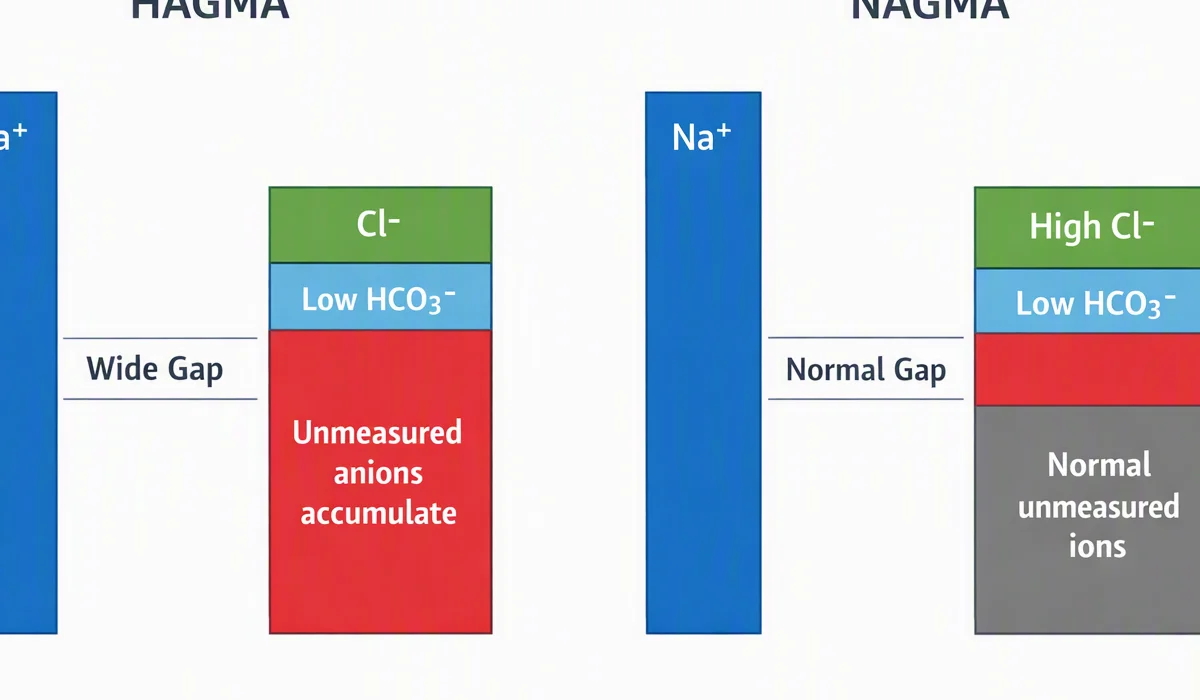
The arterial blood gas often shows respiratory alkalosis initially, followed by mixed findings as the poisoning worsens. This test is especially helpful for detecting the mismatch between pH, carbon dioxide, and serum bicarbonate. If the blood gas shows a low carbon dioxide and the chemistry panel shows low bicarbonate, salicylate toxicity becomes more probable.
Electrolyte imbalance is also common. The electrolyte panel may show changes in sodium, chloride, and bicarbonate that support an anion gap metabolic acidosis. Vomiting, dehydration, and increased respiratory losses can alter the serum chemistry picture, which is why repeat testing is often necessary. The overall pattern reflects systemic toxicity rather than a single isolated abnormality.
Additional findings can include dehydration, hypokalemia, and evidence of acidemia or alkalemia depending on timing. The combination of an elevated anion gap metabolic acidosis plus respiratory alkalosis is especially suggestive. In other words, the lab profile often reveals a mixed acid-base disorder that needs prompt attention.
When a Normal Anion Gap Does Not Rule Out Salicylate Poisoning
A typical anion gap does n’t rule out salicylate poisoning. This is an important diagnostic clue because the condition can be missed when clinicians rely too much on a single number. In early toxicity, the anion gap may still be normal, especially if the metabolic acid load has not yet fully developed or if vomiting and other processes temporarily offset the chemistry.
Another reason is acid-base compensation. The body may partially compensate for the initial respiratory alkalosis or metabolic acidosis, which can make the lab pattern appear milder. Albumin can also affect interpretation, and a low albumin level can conceal the expected gap elevation. That is why clinical suspicion must stay elevated when the history suggests toxin exposure.
If the patient has tinnitus, nausea, hyperventilation, or confusion after possible aspirin overdose, salicylate toxicity should remain on the list even if the calculated gap is not yet striking. The diagnosis depends on the full clinical picture, not just a single chemistry result. Repeating the electrolyte panel, checking the arterial blood gas, and measuring the salicylate level may reveal changes that were not present at the first draw.
In practice, a normal gap may simply mean the poisoning workup is performed too soon, incomplete, or masked by compensation. If suspicion remains high, the patient still needs close monitoring and repeat laboratory testing. This is especially true when symptoms and labs do not align, because salicylate toxicity can worsen fast.
Treatment and Monitoring Considerations
Management of salicylate toxicity depends on the degree of toxicity, the time since ingestion, and the patient’s acid-base balance. If the ingestion is new and the patient qualifies, activated charcoal may reduce absorption. This is most useful early and only when airway protection is adequate. Because salicylates can continue to be absorbed, clinical follow-up assessment is important after any decontamination step.
Urinary alkalinization is a key treatment strategy in many cases. Raising urinary pH helps increase salicylate excretion and can reduce ongoing systemic toxicity. Maintaining the right acid-base state also matters because acidemia drives salicylates into tissues, worsening symptoms and central nervous system effects. This is why serum bicarbonate, electrolytes, and pH are monitored closely during treatment.
Hemodialysis is considered when toxicity is advanced or when the patient has worsening symptoms, significant acidemia, renal impairment, or rising salicylate levels. It is one of the most powerful ways to remove salicylates from the blood. In critical care, dialysis may be lifesaving when the poisoning workup shows severe NAGMA causes metabolic derangement or when clinical deterioration continues despite supportive care.
Ongoing monitoring should include repeated salicylate level checks, electrolyte panel review, arterial blood gas assessment, and attention to mental status and breathing pattern. Because salicylate toxicity can shift quickly, clinicians often trend the anion gap, serum bicarbonate, sodium, chloride, and albumin over time. This repeated laboratory interpretation helps confirm whether treatment is reversing the acid load and restoring acid-base balance.
FAQs About Salicylate Toxicity and Anion Gap
Why does salicylate toxicity elevate the anion gap?
Salicylate toxicity raises the anion gap because it causes buildup of unmeasured acidic metabolites. These acidic metabolites lead to metabolic acidosis, which lowers serum bicarbonate and widens the difference between measured cations and anions. Lactic acidosis and ketosis can also add to the acid load, making the gap even more elevated.
Does salicylate poisoning cause both respiratory alkalosis and metabolic acidosis?
Yes. Salicylate poisoning often causes a mixed acid-base disorder with respiratory alkalosis and metabolic acidosis at the same time. Early hyperventilation lowers carbon dioxide and raises pH, while later accumulation of acids lowers serum bicarbonate and increases the anion gap. This combination is a classic pattern in salicylate toxicity.
Can a normal anion gap rule out salicylate toxicity?
No. A normal anion gap does not rule out salicylate toxicity, especially in early toxicity or when acid-base compensation is masking the pattern. Albumin levels can also affect the result. If the clinical suspicion is strong, repeat labs and blood gas analysis are still needed.
What lab tests should be checked with suspected salicylate overdose?
Key tests include a salicylate level, arterial blood gas, electrolyte panel, serum bicarbonate, sodium, chloride, and albumin. These studies help identify respiratory alkalosis, metabolic acidosis, and any electrolyte imbalance. Serial testing is often important because the pattern may change over time.
How is salicylate toxicity treated when the anion gap is elevated?
Treatment may include activated charcoal if the ingestion is recent, urinary alkalinization to increase salicylate excretion, and hemodialysis for severe cases. Supportive care and close monitoring are essential. The elevated anion gap helps confirm significant poisoning, but treatment decisions should be based on the full clinical picture, not the gap alone.