How the Anion Gap Is Used in Blood Gas Assessment
What Is the Anion Gap?
The anion gap is a useful way to look at acid-base balance by reviewing the major measured electrolytes in the serum chemistry. It is not a straightforward measurement of a particular substance; instead, it estimates the difference between measured cations and measured anions, allowing clinicians infer the presence of unmeasured anions and unmeasured cations.
In routine clinical interpretation, the most common version uses sodium, chloride, and bicarbonate. Because sodium is the primary measured cation and chloride plus bicarbonate are the main measured anions, the calculation gives a helpful snapshot of the body’s buffer system and whether an acid load may be present. That is why an anion gap calculator is often used alongside blood gas interpretation and the electrolyte panel.
The concept is straightforward, but the clinical meaning NAGMA causes is not. A normal lab result does not always mean there is no metabolic disorder. The anion gap helps identify hidden problems that may not be clear from pH alone, especially when high anion gap in renal failure respiratory compensation or other processes are also affecting the numbers.
Why the Anion Gap Is Important in Gas Exchange Analysis
Blood gas analysis starts with the pH level, PaCO2, and bicarbonate, but those values do not always explain the full picture. The anion gap adds another layer of clinical interpretation by helping distinguish various acid-base disorders. It is especially useful when evaluating metabolic acidosis, because it can show whether the bicarbonate drop is being matched by a rise in chloride or by an increase in unmeasured acids.
A low bicarbonate on an arterial blood gas can occur in several settings. The anion gap helps separate a normal anion gap process from a high anion gap process, which changes the differential diagnosis and the urgency of treatment. For example, a high anion gap may suggest lactic acidosis, ketoacidosis, uremia, or toxic alcohols, while a normal anion gap may point toward diarrhea or renal tubular acidosis.
In other words, the anion gap is a diagnostic clue that links the chemistry panel to the blood gas. It improves clinical interpretation by showing whether the acid-base disturbance is caused by loss of bicarbonate, accumulation of acids, or a mixed disorder with compensation.
How to Calculate the Anion Gap
The standard anion gap formula is:
Anion gap = Sodium - (Chloride + Bicarbonate)
This formula uses values from the electrolyte panel or serum chemistry. Some labs include potassium, but many clinical workflows exclude it because sodium, chloride, and bicarbonate are usually sufficient for routine interpretation. The exact reference range can vary by laboratory method, so the number should always be compared with the local reference range.
To use an anion gap calculator correctly, you need the most recent sodium, chloride, and bicarbonate values. That matters because blood gas interpretation often happens quickly, and changes in pH or PaCO2 may be occurring alongside a shifting metabolic picture. If you only look at the arterial blood gas without considering the chemistry panel, you may miss an acid load or an unmeasured anion burden.
Albumin also matters because it is a major negatively charged protein in plasma. When albumin is low, the measured anion gap can appear lower than expected even when a metabolic disorder is present. That is why clinicians often think in terms of the corrected anion gap rather than relying only on the raw number.
How to Read a High Anion Gap
A high anion gap usually suggests there are unmeasured unmeasured anions in the blood. This is the classic pattern in high anion gap metabolic acidosis, where acids accumulate faster than the body can neutralize or eliminate them. In blood gas interpretation, this pattern often appears with a reduced pH, low bicarbonate, and respiratory compensation through a lower PaCO2.
Common causes include lactic acidosis, ketoacidosis, and renal failure. Lactic acidosis can occur when tissue hypoperfusion, hypoxia, or impaired metabolism drives up lactate production. Ketoacidosis is often seen when ketone bodies accumulate, such as in diabetes, starvation, or alcohol-related states. Renal failure, especially advanced uremia, leads to retention of acids that the kidneys can no longer clear effectively.
Uremia is a especially important cause because it may evolve gradually. In that setting, the blood gas may show metabolic acidosis before symptoms become dramatic. A high anion gap therefore functions as a pathophysiology marker, not just a number. It suggests that the acid-base disturbance reflects true acid accumulation rather than simple bicarbonate loss.
When the anion gap is high, think about the clinical context: perfusion status, glucose, ketones, kidney function, lactate, and exposure history. The Anion Gap Calculator does not diagnose the cause by itself, but it tightens the differential and points toward the next lab result or bedside test that matters most.
How to Interpret a Normal Anion Gap
A normal anion gap does not eliminate metabolic acidosis. Instead, it often suggests non-anion gap metabolic acidosis, where bicarbonate is removed and chloride rises to maintain electrical neutrality. This pattern is a common finding in diarrhea and renal tubular acidosis.
Diarrhea leads to direct bicarbonate loss from the gastrointestinal tract, so the body adjusts by increasing chloride. Renal tubular acidosis occurs when the kidneys fail to acidify the urine or reabsorb bicarbonate properly, again producing a normal anion gap pattern. In both cases, blood gas interpretation may show metabolic acidosis with a relatively preserved anion gap because chloride replaces the lost bicarbonate.
This distinction is clinically useful. A normal anion gap metabolic acidosis makes less likely lactic acidosis, ketoacidosis, and toxic alcohols, and suggesting causes involving bicarbonate loss or impaired renal acid handling. That makes the anion gap a helpful branch point in the diagnostic workflow.
A normal anion gap also helps explain why the pH may be low even when no major unmeasured acid is present. The lab result can look less dramatic than a high anion gap state, but the metabolic disorder is still genuine and often addressable by addressing fluid loss, renal disease, or another underlying source.
How Albumin Affects the Interpretation
Albumin is a major elements shaping the anion gap. Because albumin is a negative protein, hypoalbuminemia reduces the measured anion gap. That means a patient can have a clinically significant acid-base problem that is partly hidden if albumin is low.
This is why the corrected anion gap is so useful. Correcting for albumin helps restore the expected estimate of unmeasured anions and increases the reliability of the lab result. In practice, if albumin is reduced, the uncorrected anion gap may look normal or only mildly elevated even when there is substantial metabolic acidosis.
The correction is especially helpful when evaluating critically ill patients, where protein levels can fluctuate due to inflammation, dilution, liver disease, or malnutrition. When albumin is low, the clinician should be careful about dismissing the anion gap. The corrected anion gap often shows a hidden acid load that more closely matches the blood gas interpretation.
Albumin also highlights why the anion gap is not just arithmetic. It reflects protein chemistry, unmeasured ions, and the broader serum chemistry environment. Appreciating that context makes the anion gap calculator more than a convenience tool; it becomes part of a more reliable clinical interpretation.
How to Identify Mixed Acid-Base Disorders
The anion gap is very helpful when the blood gas fails to match a single straightforward diagnosis. A mixed disorder may occur when more than one acid-base process is taking place at the same time. This is where the delta gap and delta-delta calculations become valuable.
The delta gap compares the rise in anion gap to the fall in bicarbonate. If the anion gap increases to a greater degree than anticipated relative to the bicarbonate drop, there may be an additional metabolic alkalosis or a concurrent disorder that dampens the expected acidosis. If the bicarbonate falls more than expected, there may be a second non-anion gap metabolic acidosis alongside the high anion gap process.
The delta-delta expands that reasoning by comparing changes in the anion gap and bicarbonate side by side. This helps identify mixed disorder patterns that would otherwise be skipped when looking only at pH or PaCO2. It is particularly useful when respiratory compensation seems overly robust or insufficient for the degree of metabolic change.
Respiratory alkalosis can also occur together with metabolic acidosis, creating a challenging arterial blood gas picture. For example, a patient with sepsis may have lactic acidosis and respiratory alkalosis at the same time. In that situation, the pH can be near normal even though a serious metabolic disorder is present. The anion gap provides a important diagnostic clue that the low bicarbonate is not the whole story.
In short, the anion gap calculator helps clinicians differentiate primary disorders from compensation and mixed disorder patterns. That is why it is often used right away in blood gas interpretation, not after the case is already solved.
Typical Diagnostic Reasons of Abnormal Anion Gap
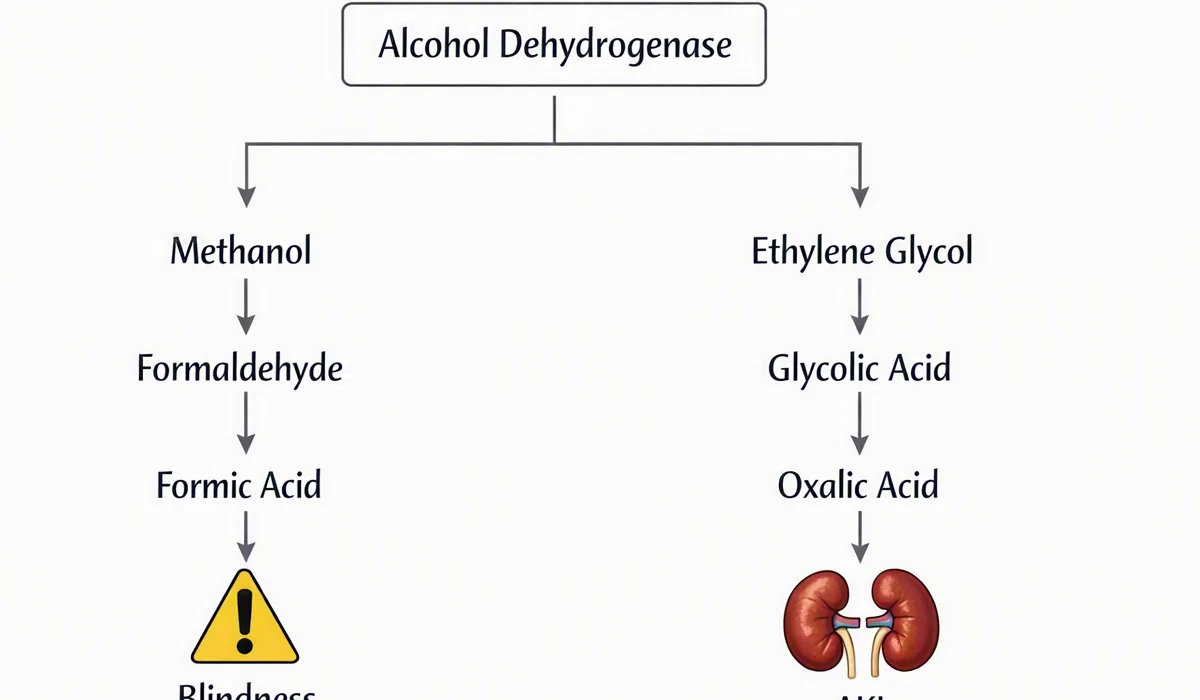
Abnormal anion gaps commonly point to a distinct set of causes. A raised anion gap can be found with toxic substances, methanol, ethylene glycol, lactic acidosis, ketoacidosis, and uremia. These causes have the same broad principle: buildup of acid or acid precursors that increase unmeasured anions.
Alcohol-related alcohols warrant special attention. Methanol and ethylene glycol are well-known examples because they can lead to severe metabolic acidosis with a high anion gap. Methanol is metabolized to formic acid, while ethylene glycol is converted to glycolic and oxalic acid metabolites. These substances can result in profound illness, so a high anion gap in the right setting is a major warning sign.
A reduced anion gap is uncommon, but it can still matter. It may occur with severe hypoalbuminemia, certain lab interferences, or excess unmeasured cations. Because low values are easy to overlook, the clinical interpretation should still consider albumin and the broader serum chemistry picture.
Regardless of the pattern of change, the anion gap should be interpreted alongside pH, PaCO2, bicarbonate, and the overall clinical story. That combined approach makes the anion gap calculator helpful in everyday workflow rather than as an isolated number.
Frequently Asked Questions: Anion Gap and Blood Gas Questions
What does an elevated anion gap mean in blood gas interpretation?
An elevated anion gap usually means there is a raised anion gap metabolic acidosis caused by extra unmeasured anions in the blood. Common causes include lactic acidosis, ketoacidosis, renal failure with uremia, and toxic alcohols. In blood gas interpretation, it suggests a real acid load rather than simple bicarbonate loss.
How do you calculate the anion gap from lab results?
Use the anion gap formula: sodium minus the sum of chloride and bicarbonate. These values come from the electrolyte panel or serum chemistry. The result should be compared with the reference range used by the lab because different methods can shift the expected normal value.
Why does albumin affect the anion gap?
Albumin is a negative protein that contributes to the body’s unmeasured anions. When albumin is low, the measured anion gap can look falsely typical or low. A corrected anion gap helps adjust for hypoalbuminemia and can uncover a hidden metabolic disorder.
What is the difference between a high anion gap and a normal anion gap metabolic acidosis?
A high anion gap metabolic acidosis usually suggests accumulation of acids such as lactate, ketones, or toxins. A normal anion gap metabolic acidosis usually indicates bicarbonate loss with compensatory chloride gain, as seen in diarrhea or renal tubular acidosis. The distinction is important because it modifies the differential diagnosis and next steps.
Can the anion gap help identify mixed acid-base disorders?
Yes. The anion gap is very useful for finding a mixed disorder because it can show whether the bicarbonate change fits the degree of acid accumulation. Delta gap and delta-delta checks can expose an additional metabolic alkalosis, a second metabolic acidosis, or respiratory alkalosis that would otherwise be missed during blood gas interpretation.